Grocery shopping budget is never a fun task, especially when prices keep rising, and during these past 12 months, we’ve seen groceries skyrocket. It’s expected to be raised another $700 for the average family in 2021, according to the news…
Ways to stick to a Grocery Shopping Budget
Sticking to a Grocery shopping budget Plan is now more critical than ever.
How to Save on Groceries and Shop on a Budget
Track what you Spend.
Start tracking if you haven’t started tracking what you spend in grocery stores, drug stores, liquor stores, and eating out. There are Apps for Grocery shopping budget, and some are included with Canadian financial institutions, or you can use a good old-fashioned pen and paper. It would help if you had a rough idea to start.
If you haven’t started tracking your spending on grub, look at the last two months of your bank statements and see which grocery stores you have purchased from and which restaurants you have eaten. This will give you a Ball Park. If you want to zero in on all the costs, you can even take it a step further and figure out how much you spend on Frozen meals, soda drinks, baking ingredients, coffee at Tim Hortons.
Budget Ahead, but Plan by the shop
Depending on how you shop, you may have decided how to budget. Some people may budget per employment pay dates or monthly or bi-weekly.
Example You may roughly know you spend $700 per month for your family of 4, including pet and personal care shopping. You may also realize you average spend $15 per day on lunch on eating out in the form of a Mcdonald’s coffee in the morning and your fast food lunch on the run.
Take Time to Plan your shop…
I’m sure you have your favourite grocery store or two. New Flyers can always be previewed, usually on Thursdays from Friday to the following Thursday. Take a close look at the meat and fresh produce, and check out the specials. This will begin your shopping training on spotting a deal and when to stock up ( but that’s more advanced and not a beginner budget move)
Planning your purchases ahead of time can help you avoid impulse buying and focus only on items that offer real value. Over time, this simple habit can make a noticeable difference in keeping your grocery shopping budget under control.
The Newbie Guide to Weekly Meal Planning
- Beginners – Need to plant an idea or two to make for a few meals or lunches.
- Advanced – Spot those Price points, know when to spend and when to save, and have every meal for the week planned.
Make a Grocery List
Making a list before leaving home will help you with impulse items and the number of times you have to leave to go to the store during the week. The more times a week you have to go shopping, the more impulse buys you may make. So if you can cut down the number of times you are entering the store, you will spend less money in a month. Print your grocery list
Keep tabs on using up items, and find time to keep a list of things to purchase on your next grocery shopping budget run. Write down the Item as soon as you are running low or using the last Item you want to be stocked. You can use your phone to keep them on your phone; I am personally old-fashioned and use a list. I have in the past bought these for my fridge ( amazon affiliate disclosure). Click Here, but usually use a piece of lined paper and a pen…
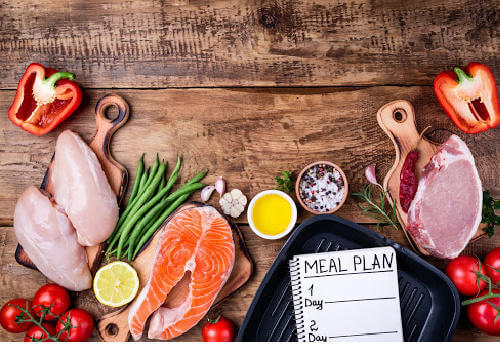
Meal Plan
If meal planning is new, start with three dinner plans per week. Some people can eat rice every day to save money, but I don’t have the willpower, nor does my husband, who loves to “fancy” cook. He is always trying new recipes and ideas and rarely makes things the same without “switching it up…”
Purchase a Meal Planner from Amazon
Budget-Friendly meals – Most Budget-friendly meals for a family of 4 will be things like casseroles, stews, soups. Find some of your favourite dishes and rotate dishes during the week and month.
I plan via the flyers on sale: I think Protein ( we eat meat), so that’s my workaround, then it’s a side or two or a combination (for example, if Chicken is on sale). Here are a few of my go-to recipes: Chicken thighs – I’ll think Bourban chicken, rootbeer chicken, Ceasar Chicken salad wraps, Thia Chicken, blackened chicken salad, Chicken fried rice, and then purchase enough Chicken for two or three meals.
Hamburger ideas: Homemade Hamburger Helper, Goulash dish, Lazy cabbage rolls, Hamburgers, spaghetti and meatballs, Hamburger soup, Lasagna, sheppards pie, etc.
Plan for lazy or last-minute meal plans. (Avoid Takeout)
Maybe you have to do a grocery shop after work and pick up a rotisserie chicken or two – it’s so easy with a bagged salad and will save you money versus eating out as a family via McDonald’s. Or maybe it’s one of those frozen packages of pasta meals in a bag.
Planning simple backup meals like these can help you avoid expensive takeout and keep your grocery shopping budget under control.
Fall in love with Leftovers
My husband hates leftovers; there is no such thing in my household as leftovers the next day, or even the same day If we make a big pot of stew as an example. I store them in containers, even mason jars, Ziploc bags, tag them with what it is, and then bring the leftovers out on another day for lunch and heat them to eat. He loves variety too much and is one of those “Foodie” people, and I’m more of a “eat whatever.”
If you take a lunch, then start trying to make a bit extra in your meals so that you can use a container of leftovers to work. When I had a typical day job, I always found the meal tasted better the next day, and it tasted so much better than a boring sandwich. I have zero problems with eating the same thing for a day or two.

Learn New ways to cook Foods
I grew up as a farm kid, and we only went grocery shopping on Saturday mornings; that was it, we always had canned veggies from her garden, my dad hunted wild game, we ate beef, chickens and pigs and even milked a few cows.
My mom worked hard with farm chores, and my dad worked outside the farm most of the year. So even though she was a “stay-at-home mom,” as we would look at that today, she didn’t have the time to do “fancy cooking.” It was a “Fancy night when she made Chinese food or cabbage rolls.
My mom always had a bowl of cooked whole potatoes in her fridge.
Cooked whole potatoes became fried potatoes, mashed potatoes, Shepard’s pie, creamed potatoes, potatoes soup.
She also kept cooking plain macaroni and rice at times as well.
Go Shopping on a Full Stomach.
Make sure you don’t go into the grocery store hungry. This one is big for me; if I go into the store hungry, I will generally come out with a lot more processed junk than otherwise. Everything looks “yummy” when you are starving, So make sure you eat at home before hitting the grocery store.
Start to Know some of your introductory Grocery pricing.
You should know where the lowest price is to buy at least the staples in your house: Milk, bread, eggs, butter, meat per lb. The more pricing you can remember or start to write them down, Start a Price Book.
If you don’t own a printer, Consider Purchasing a Price Book from Amazon.ca.
The better you know your pricing, the more you will be better at sticking with your grocery shopping budget. It’ll start to naturally the more you pay attention to each Item you place in your cart and begin the tracking process.

Figure out your brand likes and dislikes
Maybe you must have Campbell’s soup if you are eating soup for lunch- That’s okay; budget for it, but perhaps you can use the generic no-name brand soups such as mushroom soup or tomato soup for your cooking of a casserole dish. Experiment with No name brands if they are cheaper by 10% or more than your usual brand. Don’t do it all in one try, but start experimenting and see if your family notices.
I purchase No Name Chips all the time at $0.99, as an example, versus spending money on Lays at $3.50 per bag. I throw them in a bowl, and no one notices, but for popcorn, it has to be Ovanbacher, and it can’t be Act 11 brand – this is in my house, and your household and taste buds will be different.
Another one in my house has to be China Lily sauce; it can’t be Kikkoman.
Know Your Grocery Store:
If you know your store’s layout, You will know where they keep the clearance items or their on-sale stuff. Example In My Walmart in the beauty section, their clearance stuff is on the back shelf near the Pharmacy.

Discounted Meat and Veggies
The best time of the day to find discounted meat or veggies is either first thing in the morning or an hour before your grocery store closes. Don’t be scared of those pink stickers on meat that say 30% off. Take a look at the meat; it’s okay to buy if it is not turning a weird colour. You can usually keep it a day in the fridge or double wrap it with more plastic or a Ziploc bag and toss it in the freezer for another day.
Chop Your veggies.
Prepared veggies can be handy, but purchasing a whole pepper or two will always be more bang for your buck than buying a pre-cut-up pepper package.
Grocery Store Flyers.
If you have the time, Grab all the store’s flyers, go through them all and decide what you would like to buy. or use a mobile app such as Reebee, or Flipp, SaleWhale This doesn’t mean you have to visit each store and buy from each, but you certainly can do that. You can also do a PRICE MATCH at select stores. New Flyers come out Thursday for preview and live on Friday for most grocery stores.
Grocery Stores that Price Match
Optimizing your Loyalty points
Pc Optimum points: try and do the majority shopping where Pc optimum points are accepted, and Price Match against Walmart and other local grocery stores.
If you have an Airmiles points card, and Safeway has a good deal on some products, Make sure you physically go and buy those good deals from Safeway or Sobeys…
Grocery shopping budget – Buy Extra Sale items.
Only when there is a Good Deal. Most stores have a 3-month cycle. This generally means the same Item will appear again at that price in 3 months. Example If you find a case lot sale on Campbell’s soup that works out to $0.50 a can or less, buy enough to last yourself 3 months; you don’t need to over-purchase.
Don’t Overstock on a sale
Over-purchasing sale items can blow your grocery shopping budget, so be aware. Slow and steady wins the race.
For example, for me, it’s ground coffee. I’ll purchase Folgers or Maxwell House when it’s on sale for $6.99 or less at my local No Frills or Walmart; I’ll purchase 2-3 at a time during the winter because I’ve learned over the years coffee grounds generally don’t go on sale o during the summer months as often. I might have up to 6 cans in my pantry, but I don’t push it beyond that. I don’t need to tie up cash in “inventory.
Watch Grocery Expiry Dates
Don’t buy 6 bottles of Ranch salad dressing when you only use it once a week because it was a good deal. After all, every food item has the best before date. This also includes Vitamins, Tylenol Etc. You will throw out your savings with the trash, and that deal has cost you money.
Keeping an eye on expiry dates is a simple way to protect your grocery shopping budget and avoid wasting money on products you may not use in time.
Prep Your Groceries when you come home!
All of your fresh produce – start chopping it up as soon as possible. Chop up your carrots, celery, peppers, grate some cheese, and make it easier on yourself to cook from scratch, and you’ll be less likely to be throwing them out in the garbage for wilting if you have things ready for a quick meal, or make a meal more filling by adding more fresh produce.
This simple habit helps reduce food waste and keeps your grocery shopping budget under control by making sure the items you buy actually get used.
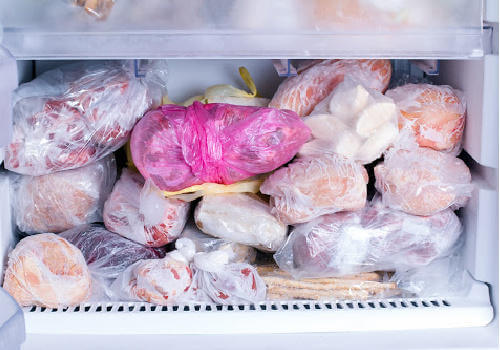
Eat What’s in the Fridge / Freezer
We play a fun game of eating and making meals with what we have in the fridge and freezer. My husband will make Clotted cream with any cream expiring or use up those avocados with a guacamole dip.
Once a month, I go through our “Leftovers,” we freeze, bring odds and ends out, and have a “Left Over” dinner.
I check the freezer for odds and ends, packages open, etc., and will use up anything I think might go to waste.
We then do some meal planning around these items for the next few days or even weeks.
Bring your Grocery Bags
Be environmentally Cautious and save a few cents every grocery trip. Many stores are now charging $0.05 per bag. ( In my area) But those nickels can add up to a quarter of every grocery trip you make. That can quickly add up to a few dollars per month.
Using reusable bags regularly is a small habit that can make a noticeable difference in your grocery shopping budget over time.
Use Grocery Coupons
I say this last because it’s not for everyone. I’m not talking Extreme Couponing here, with giant stockpiles of toothpaste; I’m simply talking about getting coupons on Items you use.
If you want to start finding coupons. Here are 10 Ways to Get Coupons Article. or Visit our Coupon Section
and Don’t forget about Cashbacks, including Checkout51 and Caddle
Use Coupons with care.
Coupons have a part in my grocery shopping budget, but I don’t rely on them; I’ll take a Free Product Coupon and a few health ones as I need them; I’m pretty fussy when it comes to using a coupon. I’ll only use a few cashback and the odd coupon for an item or brand I purchase.
Example back to the potato chips, I purchase No name chips at $0.99 – Lays has a coupon, for example, a $1.00, but is only on sale $2.99, it’s still going to cost me $1.99 for a bag of chips, even though I can brag to everyone that I saved 50% because the Regular price was $3.99
Do you have any other tips on saving money while grocery shopping?